IRS Research Repository
Description
Atlas is an internal tool developed to support discovery and the creation of the IRS Research Repository. It is an assemblage of manual and automated tasks, processes, and principles that support the centralized storage, analysis, and governance of insights derived from a series of user research and data analytics efforts, informing product direction and business priorities.
Challenge / Goal
Research insights at the IRS were siloed across teams, formats, and initiatives, making it nearly impossible to build on prior learning or align priorities across the enterprise. The goal was to identify existing fragmented efforts, align stakeholders around a shared vision, and create a centralized and scalable solution capable of growing in both the volume and relevancy of research insights and guidance materials it could support.
The platform ensured that:- Research insights were centrally stored, consistently tagged, and retrievable across the enterprise
- Teams could build on prior findings rather than duplicating effort or starting from scratch
- Governance processes kept the repository accurate, current, and aligned to evolving product priorities
From Insight to Impact
Translating research, design, and storytelling into measurable outcomes.
Discover
Led conversations across the enterprise to surface business efficiency gaps and prioritization challenges related to how research insights were being captured, stored, and shared. Identified siloed efforts across product teams and facilitated alignment sessions to define the scope and requirements for a centralized, scalable repository solution.
Explore
Directed product workshops to inventory existing research artifacts, understand how teams currently accessed and applied insights, and identify gaps between current-state processes and a more capable future state. Workshop outputs directly shaped the taxonomy, governance model, and automation approach behind Atlas.
Establish
Partnered with stakeholders to define and document the governance frameworks, collection processes, and operational standards required to sustain the repository long-term. Established the Atlas board as a central coordination mechanism, combining manual processes and automated pipelines to ensure research artifacts were consistently ingested, tagged, and made accessible across teams.
Results
- Established a centralized research repository that eliminated duplicated effort and gave teams a shared foundation for decision-making
- Strengthened cross-functional alignment by surfacing previously siloed insights and creating a common language around research priorities
- Enabled more informed product prioritization by connecting research findings directly to business decisions and strategic roadmaps
- Elevated the maturity of research operations at the IRS by introducing governance, automation, and scalable processes where none previously existed
Discover
Fostered conversations and efforts to identify business efficiency and prioritization challenges.
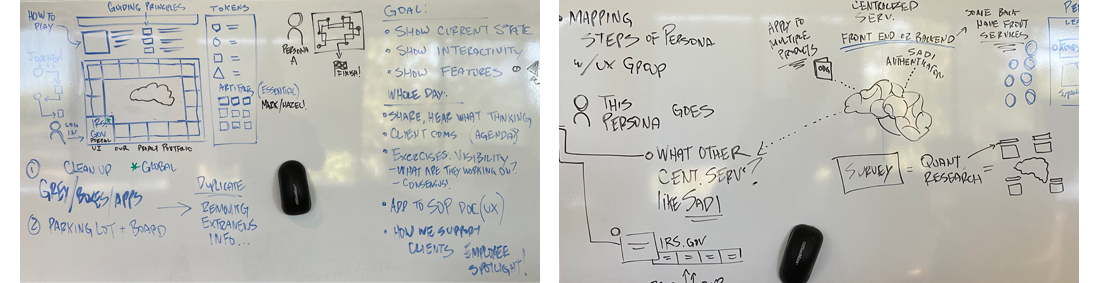
Role:Creative Director and UX StrategistResponsibility:Team Lead | Creative and Strategic Direction
Explore
Conducted workshops to identify current efforts and more suitable needs.
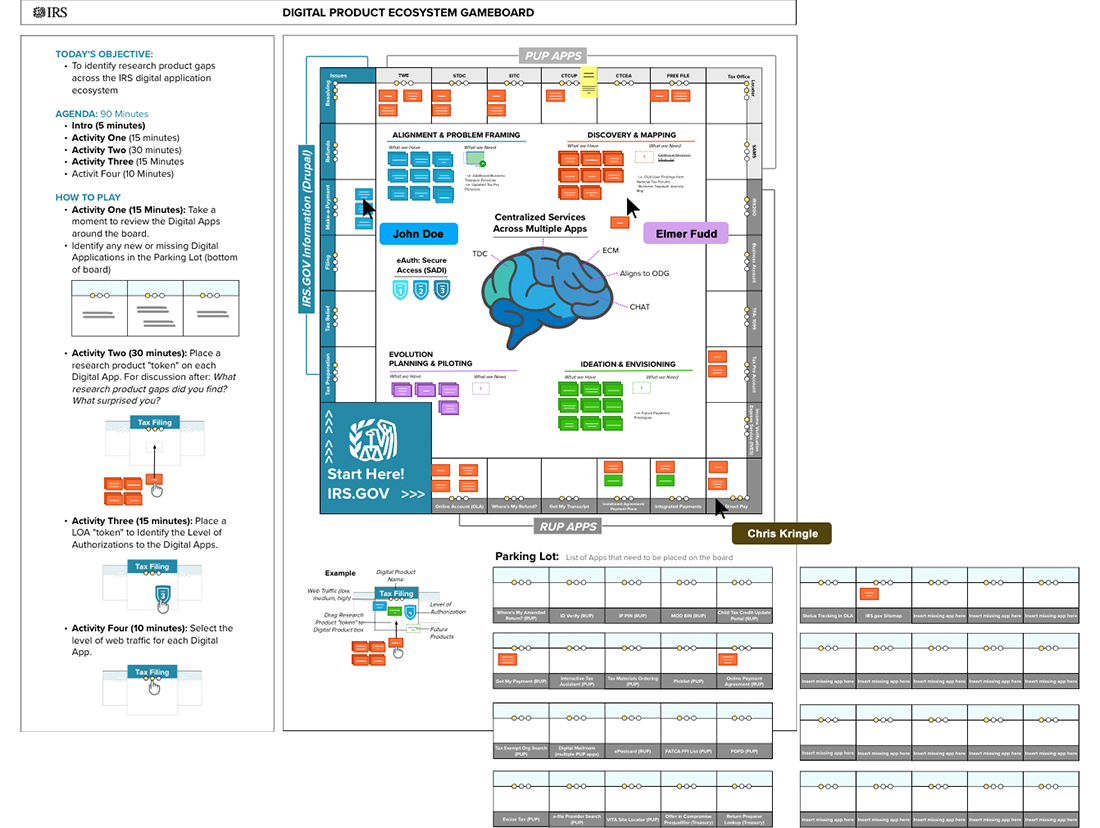
Role:Creative Director and UX StrategistResponsibility:Team Lead | Creative and Strategic Direction
Establish
Establishing guidance on process and governance improvements specific to the collection of user research artifacts.
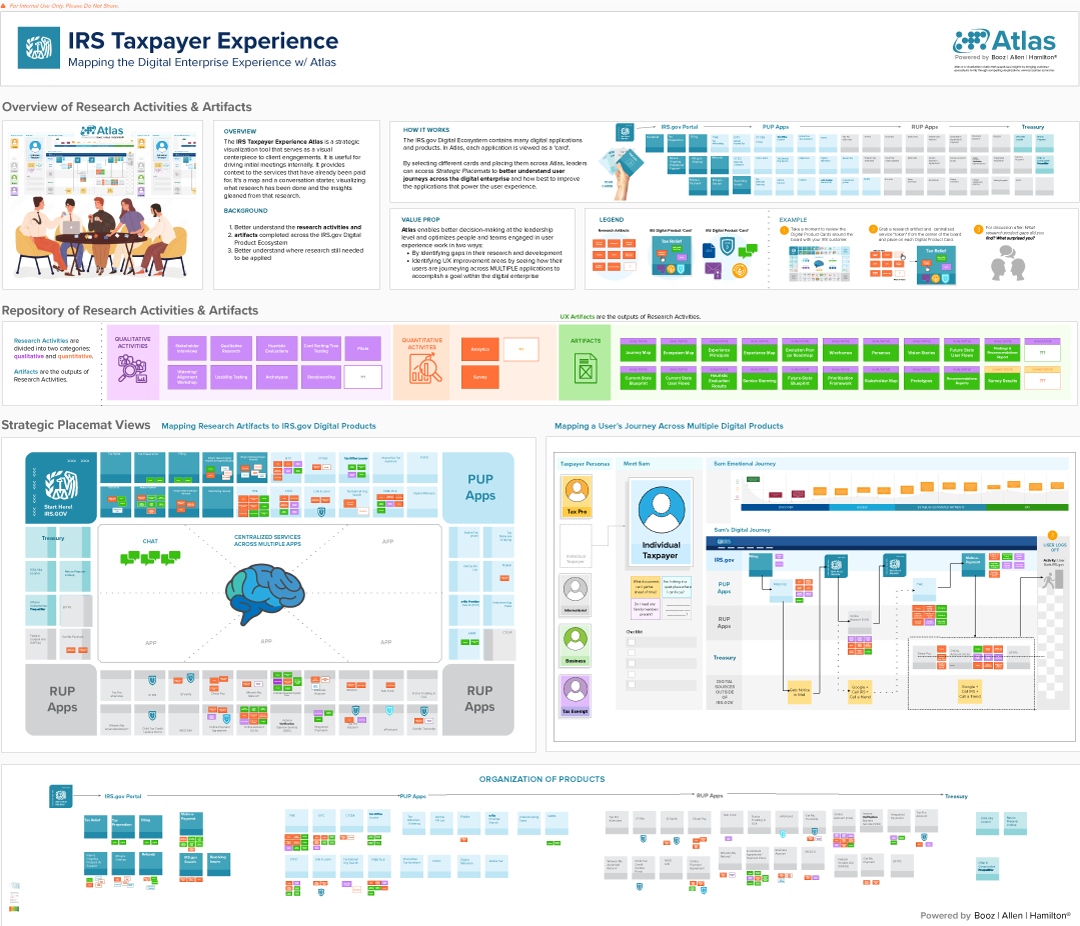
Role:Creative Director and UX StrategistResponsibility:Team Lead | Creative and Strategic Direction
Measure
Established performance criteria to evaluate the repository's adoption and impact, including tracking how frequently research artifacts were accessed, how insights influenced product decisions, and the degree to which teams reduced duplicated research efforts. Ongoing feedback loops with stakeholders ensured the platform continued to evolve in relevance and usability.
Role:Creative Director and UX StrategistResponsibility:Team Lead | Creative and Strategic Direction
Reflection
Research is only as valuable as the organization's ability to find it, trust it, and act on it. Atlas addressed a problem that many large organizations face but rarely tackle directly: the slow accumulation of insights that never get used because no one knows they exist. By treating the repository as a product, with its own governance, processes, and stakeholder ecosystem, the work created infrastructure that made research a living, accessible resource rather than a collection of archived decks.
The initiative reinforced how much organizational design and technical design overlap. Building Atlas required the same skills as building any user-centered product: listening deeply, mapping workflows, removing friction, and earning trust. The difference was that the users were internal, researchers, product managers, and business owners, and the outcome was a more intelligent, better-connected IRS enterprise.