IRS Tax Professional Account
Description
Develop a functional prototype informed by insights derived from user testing efforts with tax professionals that uncovers their needs and expectations in regard to managing their clients' tax relationship and obligations with the IRS. Conceptual models explored solutions focused on improving capabilities and functions specific to managing client authorizations, tax records, and obligations.
Challenge / Goal
Tax professionals manage relationships on behalf of hundreds of clients, yet existing IRS tools required navigating fragmented systems, redundant authorization steps, and unclear status indicators, creating friction and inefficiency. The goal was to design a unified account experience that reduced that burden, surfaced critical client information contextually, and improved the overall relationship between tax professionals and the IRS.
The platform ensured that:- Tax professionals could manage client authorizations efficiently in one place
- Time-sensitive obligations and deadlines were surfaced clearly and contextually
- The experience reflected a professional-grade tool worthy of industry trust
From Insight to Impact
Translating research, design, and storytelling into measurable outcomes.
Discover
Led scoping exercises and stakeholder alignment sessions to define research objectives and establish a two-phase project roadmap. Coordinated directly with IRS program leads and tax professionals to surface pain points around authorization management, client record access, and obligation tracking, translating those findings into clear design priorities.
Explore
Directed a Human Centered Design process, from whiteboard sessions and paper sketches through low- and high-fidelity prototypes, across two iterative design phases. Applied Lean UX principles to move quickly between concept and validation, ensuring each design decision was grounded in practitioner feedback and evolving stakeholder expectations.
Establish
Partnered with IRS leadership to secure stakeholder approval and prepare the prototype for public showcase at the 2017 IRS Tax Forums, a major industry event attended by thousands of tax professionals nationwide. Managed the handoff from design iteration to live demonstration, ensuring the prototype accurately represented research-informed decisions and was presentation-ready.
Results
- Established a repeatable HCD process that became a model for future IRS digital product efforts
- Strengthened the IRS–tax professional relationship through transparent, practitioner-centered design
- Enabled two rounds of validated user testing that directly shaped prototype priorities and MVP scoping
- Elevated design credibility within the IRS by earning wide praise at the 2017 Tax Forums and securing leadership recognition
Discover
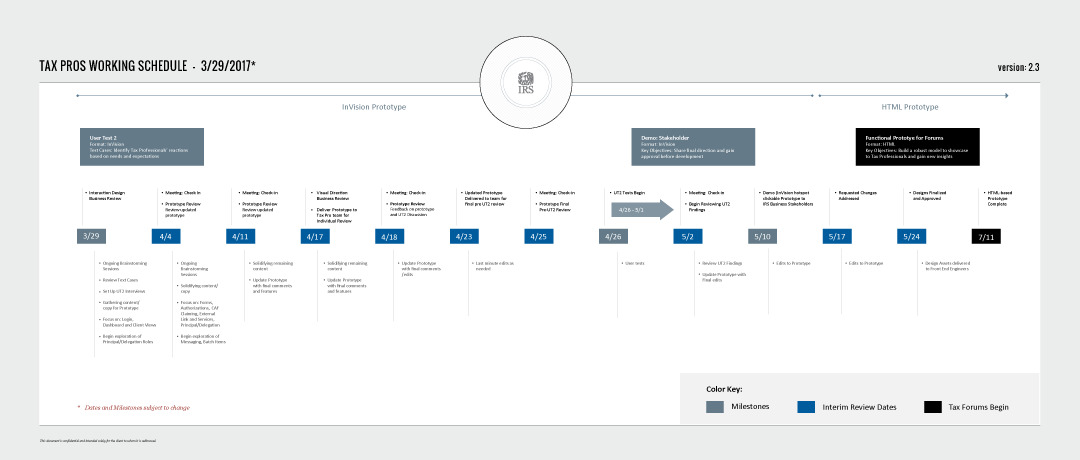
Conducted scoping exercises and defined key objectives to construct high-level roadmap(s) that highlight milestones and deliverables for each of the two major phases that included user testing efforts.
Role:DESIGN LEAD, UI / UX DESIGNERResponsibility:TEAM LEAD | CREATIVE AND STRATEGIC DIRECTION
Explore
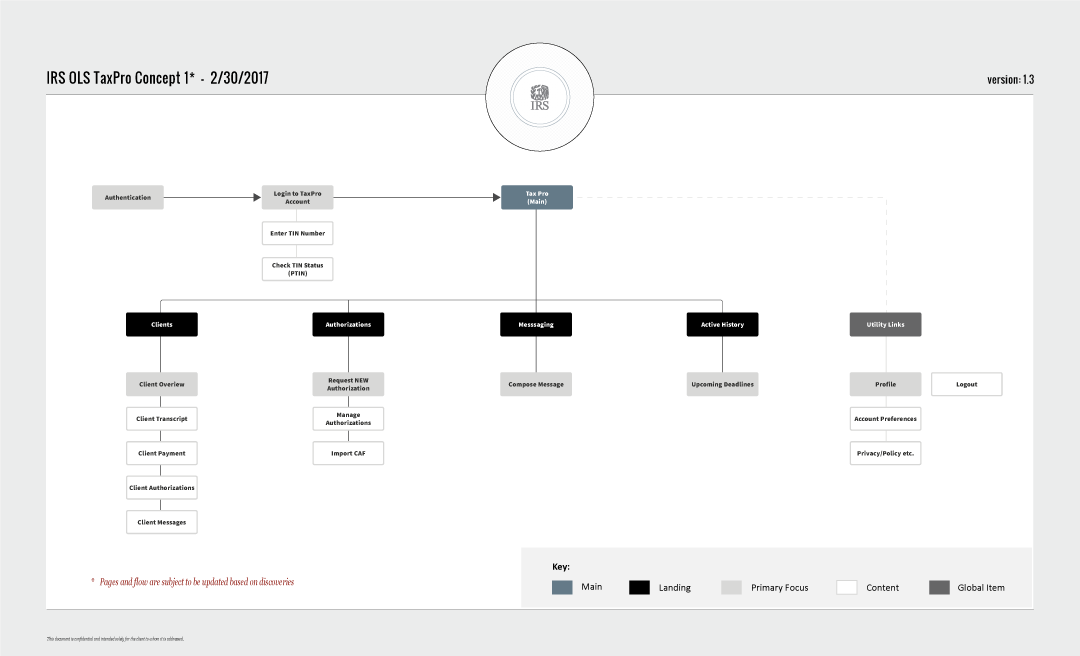
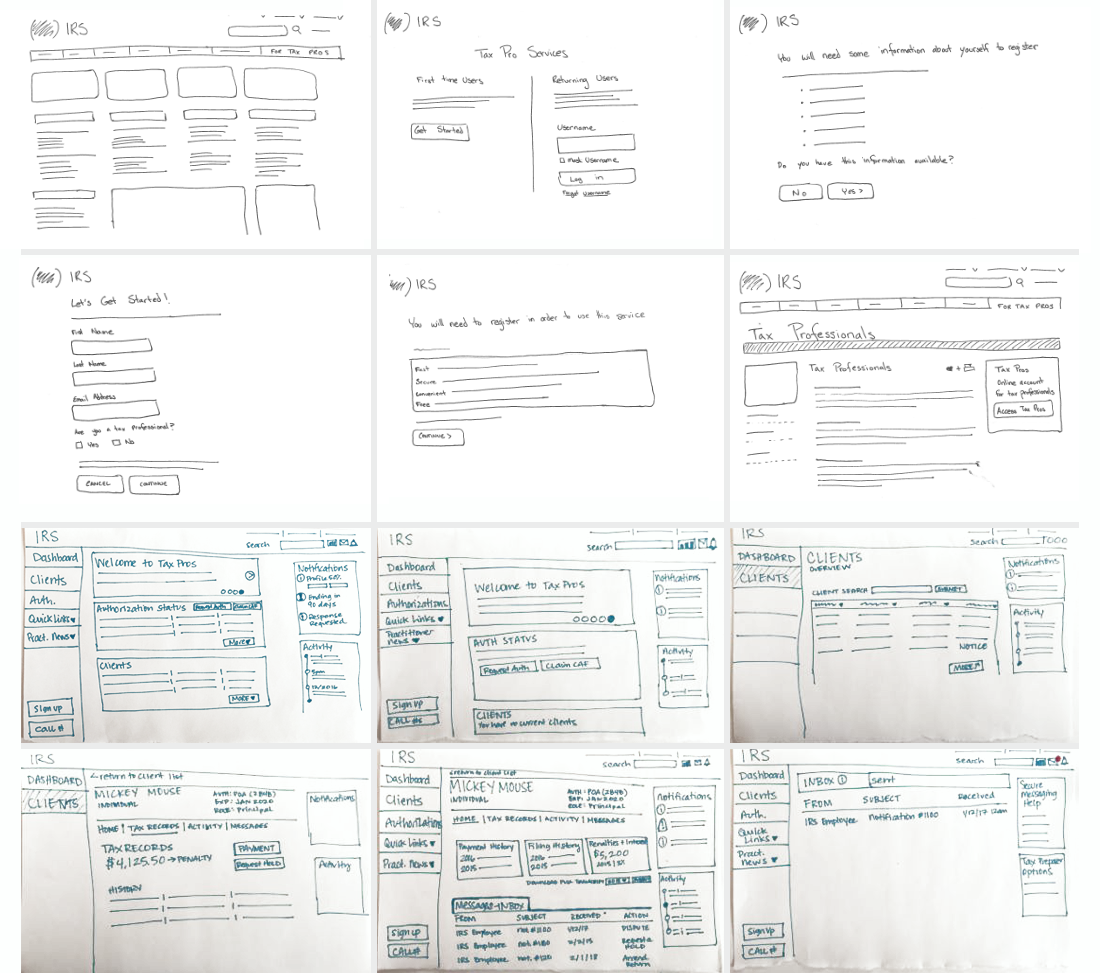
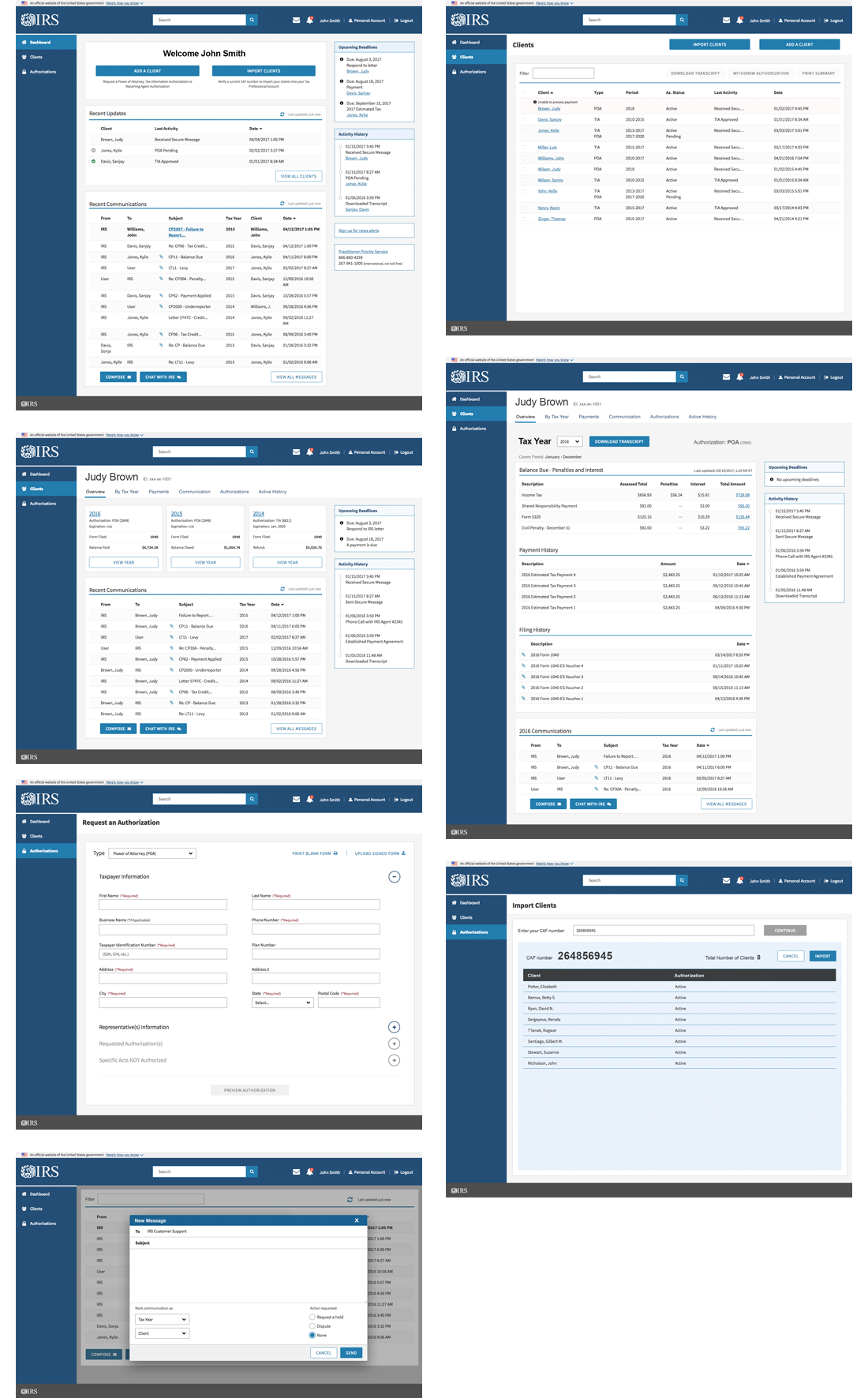
Applied Human Centered Design (HCD) and Lean principles throughout each stage (whiteboard exercises, paper sketches, low- and high-fidelity mock-ups) to review, analyze, and inform the optimal experience.
Role:DESIGN LEAD, UI / UX DESIGNERResponsibility:TEAM LEAD | CREATIVE AND STRATEGIC DIRECTION
Establish
After months of iterations and two rounds of user testing the team obtained stakeholder approval to showcase the prototype to tax professionals at the 2017 Tax Forums.
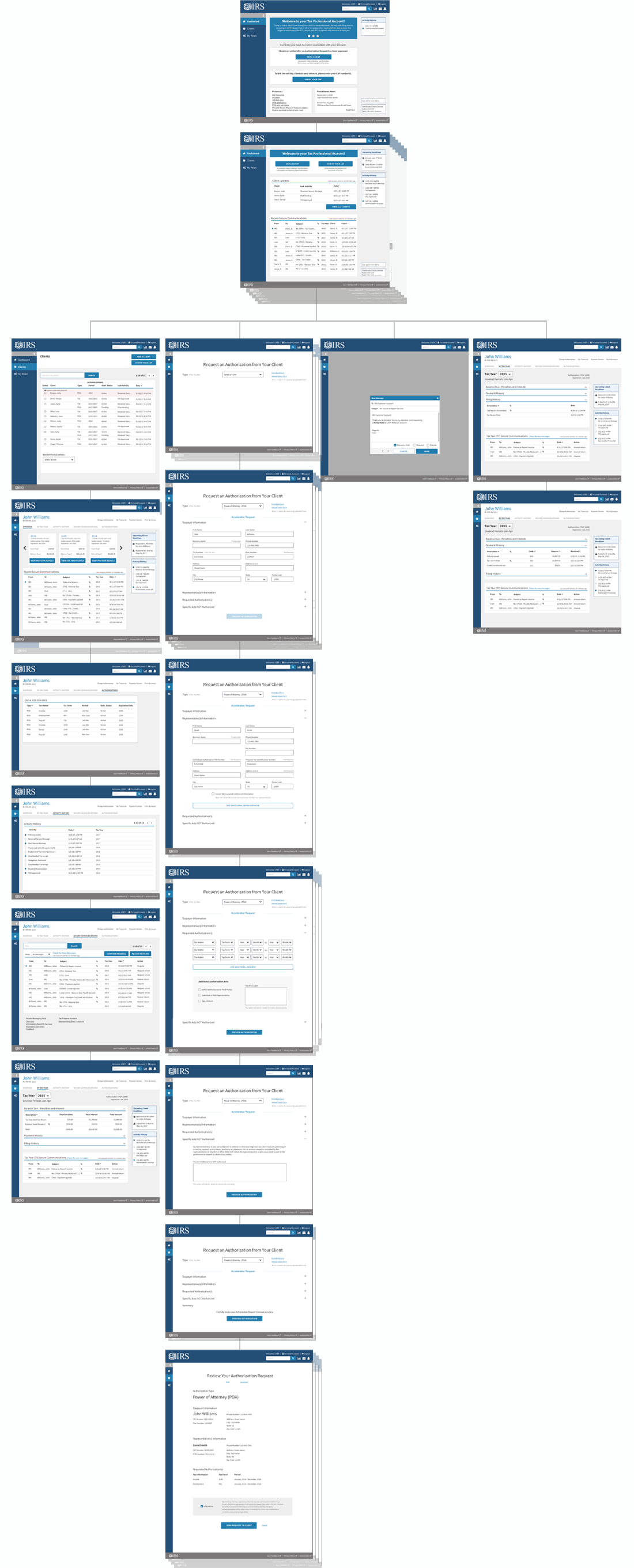
Role:DESIGN LEAD, UI / UX DESIGNERResponsibility:TEAM LEAD | CREATIVE AND STRATEGIC DIRECTION
Measure
With high-quality UX insights obtained from two rounds of user testing sessions, and wide praise received from tax professionals at the industry Tax Forums, the team set focus to define scoping and seek funding and prioritization for the MVP.

Role:LEADERSHIPResponsibility:TEAM LEAD | CREATIVE AND STRATEGIC DIRECTION
Reflection
This initiative demonstrated what becomes possible when a government agency commits to listening before building. By embedding tax professionals as true research partners, not just end users, the project surfaced the real friction points in IRS interactions and translated them into a prototype that felt both practical and human. What began as a conceptual exploration became a proof-of-concept that earned industry-wide validation at the 2017 Tax Forums, and laid the groundwork for a full MVP investment.
The process reinforced a principle central to my work: impactful design in complex, high-stakes environments requires equal parts rigor and empathy. Navigating multi-stakeholder dynamics, tight federal constraints, and deeply specialized user needs demanded not just strong craft, but the ability to build trust, with clients, with colleagues, and with the communities we designed for. The result was a prototype that didn't just demonstrate what the experience could look like, but why it mattered.